Survivor Story
Vladimir Yastrebskoy, born 1937
We Came Back to a Crater Where Our House Had Stood
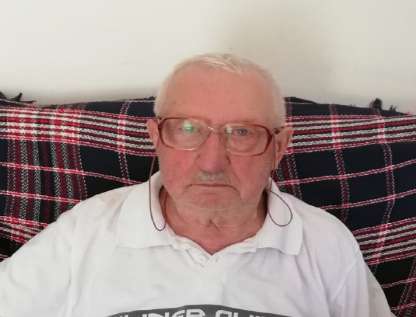
I was born in Belarus in the city of Rechytsa. When the war began I was three and a half years old. We were left, my mother and five sisters, and I was the youngest. When the Germans began to bomb Belarus, the older sisters started telling our mother that we had to flee. We lived in a large house. Our mother was a fine seamstress, and many relatives and friends always came to us. It was very hard to leave everything and flee with small children, but the older sisters convinced our mother. We dropped everything and managed to board the very last train.
The cars were made for transporting livestock, and now they were packed with people. The train often stopped because of frequent bombings, and we had to jump out of the car and lie on the ground. When the bombing ended we had to find one another to keep going. There was no food. Water we took at stops. So we traveled three days and nights.
“We returned to Rechytsa, but where our house had stood we saw a great pit. Almost every house was destroyed, and the relatives who would not evacuate were dead.”
We arrived in the Penza region. Our family was sent to the village of Vazerki. We were put in an old broken down house with a hole in the roof. We went into the woods to gather brushwood to heat the stove and warm ourselves. The older sisters went from house to house looking for any work, to get a piece of bread. Often they went into the field to gather rotten potatoes, and when autumn came they gathered the ears of grain that remained on the ground after the combine had passed.
We lived in that village until the end of the war.
After the war we returned to Rechytsa, but where our house had stood we saw a great pit. Almost every house was destroyed, damaged by shelling and bombing. The relatives who had not wanted to evacuate were dead.
We went to my older sister in Omsk, and stayed there.
These are my memories of the war.
About this story. Recorded and edited for Light of Care. Stories are preserved as told and lightly edited for clarity.